In 30 seconds
Joining doesn't start on day one
By the time the new colleague walks in, their data, declarations and first courses are already waiting.
Onboarding doesn't start on the first working day. That's where it ends.
In 30 seconds
By the time the new colleague walks in, their data, declarations and first courses are already waiting.
How deep shall we go?
Same system. Three depths.
If all this lives in separate emails, spreadsheets and people's heads, someone has to keep piecing the picture together.
Offer
They receive the offer by email and accept it without logging in.
Details
Once, on one form. That becomes the contract and the personnel file.
Documents
Created from the details provided. Accepted online, or with an official signature if the document requires it.
Preparation
Laptop, phone, access badge, system access, mandatory training. A checklist, not memory.
Day one
By the time they arrive, everything is in place. The paperwork doesn't start on day one.
The candidate only sees what concerns them. Meanwhile HR and the manager see what is ready and what is still missing.
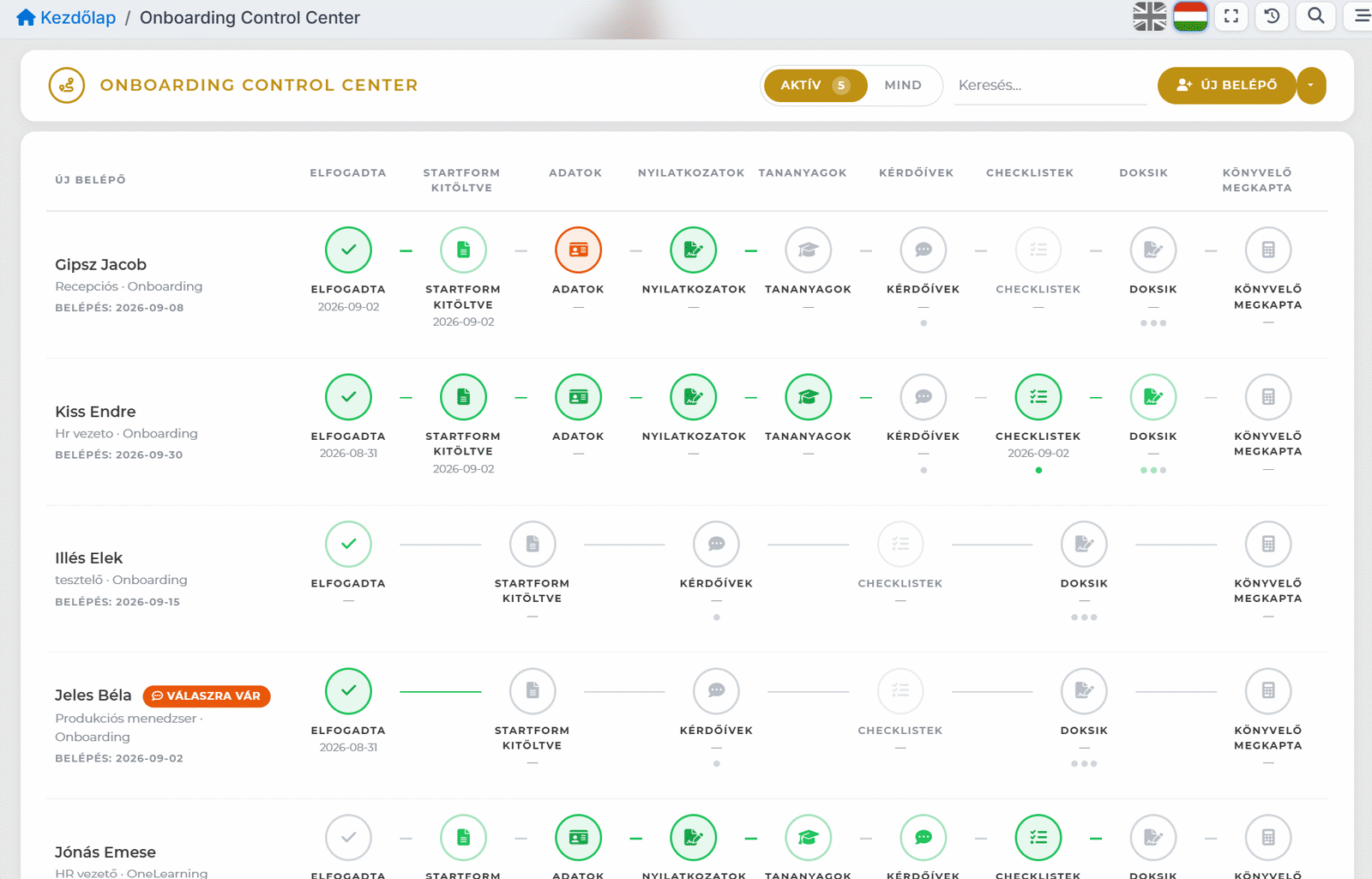
No need to rebuild the process for every new hire.
An office colleague needs something different from someone joining production, and different again from a manager.
The steps, tasks and documents can change. Even so, the same screen shows where everyone stands — and what comes next.
A different sequence. The same screen.